You Won’t Believe These Hidden Festival Vibes in Muscat
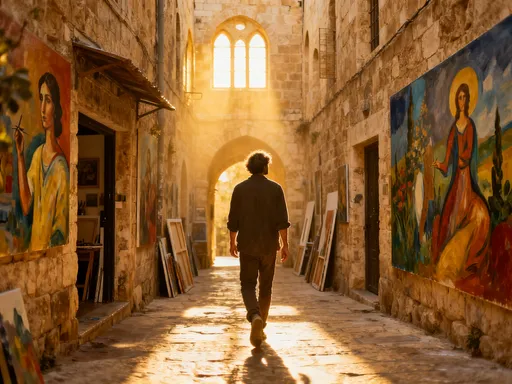
Muscat, Oman isn’t just dates and deserts—there’s a whole underground world of local festival energy waiting to be discovered. I stumbled upon celebrations so authentic, so full of rhythm and color, that I completely rewrote my idea of Omani culture. Think nighttime drum circles, spice-scented processions, and courtyard gatherings where tradition comes alive. This is the side of Muscat most travelers miss—intimate, unexpected, and absolutely unforgettable. These are not performances staged for cameras but living moments woven into the daily life of neighborhoods where generations gather to honor heritage through music, food, and shared stories. In an age where travel often means crowded landmarks and curated experiences, Muscat’s hidden festivals offer something rare: real connection.
The Secret Pulse of Muscat: Beyond the Postcard Views
Muscat is often portrayed through its postcard-perfect images—the turquoise waters lapping against rugged cliffs, the gleaming domes of the Sultan Qaboos Grand Mosque, and the sun-bleached fortresses that stand like sentinels over the city. While these landmarks are undeniably impressive, they represent only one layer of a much richer cultural tapestry. Beneath the surface of guidebook itineraries lies a quieter, more intimate rhythm: the pulse of local festivals that animate Muscat’s soul. These gatherings are not held in grand auditoriums or ticketed venues but in the heart of historic neighborhoods like Old Muscat, Muttrah, and Ruwi—places where Omani families have lived for generations and where traditions are preserved with quiet pride.
Unlike the polished cultural shows designed for tourists, these festivals are community-led, often organized by neighborhood elders or youth groups who come together to celebrate seasonal events, religious occasions, or national holidays. The atmosphere is warm and unscripted. You might hear the soft beat of a *tabl* drum echoing from a narrow alleyway, or catch the flicker of brass lanterns glowing behind latticed windows. There’s no stage, no microphone, and certainly no entry fee—just people gathered in courtyards, on rooftops, or along quiet seaside paths, sharing songs, stories, and food that have been passed down for decades.
What makes these moments so powerful is their authenticity. Visitors are not spectators but potential participants, welcomed not with brochures but with smiles and gestures of inclusion. A grandmother might hand you a cup of cardamom-scented coffee, or a child might pull you gently into a circle dance. These interactions aren’t performative; they’re natural extensions of Omani hospitality, known locally as *diwaniya*—a tradition of open gathering and conversation. To experience Muscat this way is to move beyond sightseeing and into the realm of true cultural exchange.
Finding the Hidden Festivals: Timing, Tips, and Local Hints
One of the challenges—and joys—of discovering Muscat’s hidden festivals is that they are rarely advertised in international travel guides or hotel brochures. There is no centralized calendar listing every neighborhood celebration, and many events are announced only days in advance through word of mouth, local WhatsApp groups, or community bulletin boards. This lack of formal promotion is part of what keeps them authentic, but it also means travelers must approach with curiosity, patience, and a willingness to connect with locals on a personal level.
The best time to encounter these festivals is during key cultural and national periods. November, for example, is a particularly vibrant month, as Oman celebrates its National Day on the 18th with festivities that extend throughout the week. In the days leading up to the holiday, neighborhoods across Muscat begin to decorate with green, red, and white flags, and spontaneous music sessions often break out in public squares. White Friday, a local shopping and cultural event held in late November or early December, also brings communities together with music, food stalls, and family-friendly activities that often include traditional performances.
To increase your chances of stumbling upon a hidden festival, start by building relationships with people who live in the city. Shop owners in the Muttrah Souq, for instance, are often deeply connected to their communities and may know about upcoming events. A simple question like “Are there any celebrations happening this week?” can open the door to an invitation. Hotel staff who are Omani residents, rather than expatriates, are also valuable sources of information. Many have family in different neighborhoods and may hear about gatherings through personal networks.
Technology can also be a helpful ally. While international social media platforms may not always carry event details, local apps like OpenSooq or community-focused Facebook groups such as “Events in Muscat” or “Oman Culture & Heritage” often share updates about upcoming festivals. Following Omani cultural influencers or institutions like the Oman Society for Folklore can also provide insight into grassroots events. The key is to stay flexible—avoid rigid schedules and leave room in your itinerary for spontaneous discoveries. Sometimes the most memorable experiences begin with a wrong turn down a quiet alley that suddenly fills with music.
A Night at the Muttrah Courtyard Festival: Lanterns, Stories, and Dates
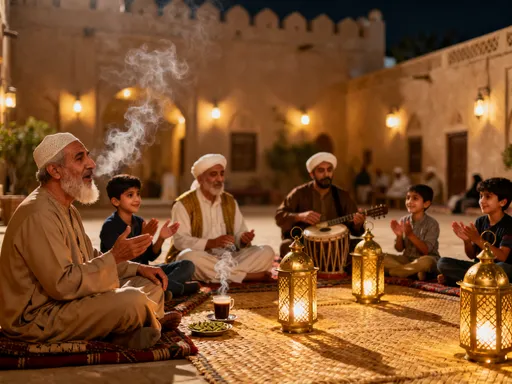
One evening in late November, just after sunset, I followed the faint sound of rhythmic clapping through the winding lanes of Muttrah. The air was warm, carrying the scent of frankincense and grilled meat. Around a corner, I found a low wooden gate slightly ajar, and through it, a scene that felt lifted from another time. In a centuries-old courtyard surrounded by coral-stone walls, dozens of people—men, women, and children—sat on woven palm mats arranged in concentric circles. Brass lanterns hung from the eaves, casting a golden glow over the gathering, and the scent of rosewater lingered in the air.
An elder in a crisp white *dishdasha* and a red-and-white *kumma* headdress sat at the center, reciting poetry in a clear, melodic voice. His words told of Omani seafaring history, of monsoon winds guiding dhow ships across the Indian Ocean, and of the values of patience, courage, and generosity. Around him, listeners nodded in quiet recognition, some whispering lines along with him. This was not a performance but a shared memory, a living thread connecting past and present.
As the poetry ended, a young man picked up a *rababah*, a traditional stringed instrument carved from coconut shell, and began to play a soft, haunting melody. Slowly, the rhythm built. Two drummers joined in with *tabl* drums, their hands moving in practiced unison. Children clapped along, their laughter blending with the music. Then, a group of men stood and formed a line, beginning the *razha* dance—shoulders swaying, hands raised, voices rising in a call-and-response chant that grew louder and more energetic with each verse. Women and older guests clapped from the sidelines, some singing along, their faces lit with pride.
I was offered a place on a mat and handed a small cup of *qahwa*, the ceremonial Omani coffee infused with cardamom and saffron. Beside me, a grandmother offered a piece of *halwa*, the sticky, amber-colored sweet made with ghee, rosewater, and nuts. As I tasted it, she smiled and said, “This is how we celebrate—slowly, together.” There were no rules, no instructions, just an unspoken understanding that everyone present was part of something meaningful. The night deepened, the music continued, and for a few hours, I wasn’t a visitor—I was a guest in a home that belonged to an entire community.
The Coastal Drum Circle: Where the Sea Meets Tradition
On the eastern edge of Muscat, where the city meets the Gulf of Oman, another kind of festival unfolds—one that blends the power of the sea with the strength of ancestral rhythm. In areas like Qurum Natural Park and the quieter stretches of Bandar Al Khairan, informal drum circles gather during festival seasons, especially around national holidays and religious celebrations. These are not organized events with permits or sound systems but spontaneous gatherings that emerge as the sun sets and the tide rolls in.
Men, often dressed in white *dishdashas* and simple head coverings, form a circle on the sand. Some carry *dafs*—large frame drums with metal jingles—while others hold wooden sticks used in the *ayyalah* dance, a traditional performance that mimics the movements of warriors preparing for battle. The rhythm begins slowly, a deep pulse that resonates through the ground. One voice rises in chant, telling of unity, honor, and the blessings of the sea. Others join in, their voices harmonizing in a way that feels both ancient and immediate.
What makes these drum circles so powerful is their emotional depth. The chants are not just songs but expressions of collective identity—reminders of a time when Omani sailors navigated by the stars and communities relied on one another for survival. The *ayyalah*-inspired movements, with their synchronized steps and rhythmic clashing of sticks, symbolize solidarity and discipline. These traditions have been passed down orally and through practice, often taught to boys by their fathers and uncles during family gatherings.
Visitors are often allowed to observe from a respectful distance, and in some cases, may be invited to join the outer circle of drummers. There is no pressure to participate, but the invitation itself is meaningful. It reflects the Omani value of inclusion, as long as respect is shown. Photographs are permitted only with permission, and flash is discouraged out of consideration for the mood and focus of the performers. For those who take the time to sit quietly and listen, the experience can be deeply moving—a reminder that culture is not something to be consumed but felt, remembered, and honored.
Spice Route Echoes: Food as Festival in Old Muscat
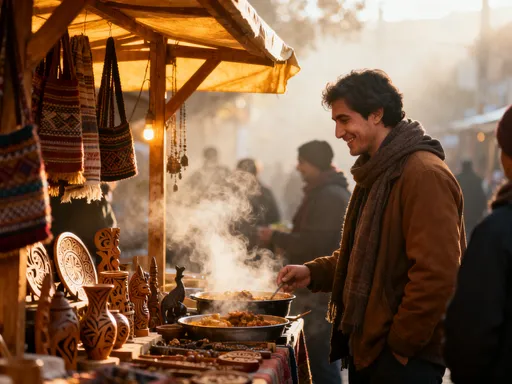
In Muscat, food is never just sustenance—it is celebration, memory, and identity all at once. During local festivals, this truth becomes especially vivid. In the narrow alleys of Old Muscat, temporary food stalls appear overnight, their grills glowing with charcoal and their air thick with the scent of cumin, cloves, and smoked lamb. These are not commercial ventures but family-run offerings, where grandmothers, uncles, and cousins come together to prepare dishes that tell the story of Oman’s place on the historic Spice Route.
One of the most anticipated festival foods is *shuwa*, a rich, spiced lamb or goat dish that takes nearly 48 hours to prepare. The meat is marinated in a blend of red chilies, garlic, coriander, and tamarind, then wrapped in banana leaves and buried in an underground sand oven heated with firewood. When unearthed, the meat falls apart at the touch, its flavors deep and smoky. At festivals, *shuwa* is served on large communal platters, and everyone eats with their right hand, tearing off pieces and sharing bread. This act of eating together is as important as the food itself—a symbol of unity and generosity.
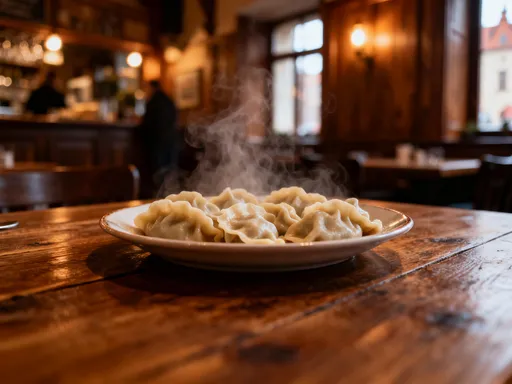
Other festival staples include *mishkak*, skewers of marinated beef or chicken grilled over open flames, and *rashid*, a sweet fried pastry drizzled with date syrup. Vendors also serve *khameer*, a soft, date-filled bread, and *halwa* in endless variations—some studded with almonds, others infused with saffron or coconut. Children run between stalls, their hands sticky with sugar, while elders sip *laban* (a fermented buttermilk drink) under shaded tents.
What makes these meals special is not just their flavor but their context. Recipes are often family secrets, handed down through generations, and cooking them during festivals is an act of cultural preservation. When visitors are invited to eat, it is not out of obligation but genuine hospitality. Refusing would be seen as polite, but accepting is a sign of respect. By sharing a meal, you are not just tasting Omani cuisine—you are being welcomed into its story.
Respectful Participation: How to Join Without Overstepping
One of the greatest gifts of traveling is the opportunity to connect with cultures different from our own. But with that gift comes responsibility—especially when entering spaces that are deeply personal and culturally significant. The hidden festivals of Muscat are not tourist attractions; they are expressions of identity, faith, and community. To participate with respect means understanding the difference between observation and intrusion, between curiosity and appropriation.
Dress is one of the first considerations. In Oman, modesty is valued, especially in traditional settings. Women should wear loose-fitting clothing that covers the shoulders and knees, and men should avoid shorts and sleeveless shirts. While it’s not necessary to wear a *hijab*, bringing a light scarf can be both practical and respectful. When entering a courtyard or sitting on a mat, it’s customary to remove your shoes—this small gesture shows awareness of local customs.
Photography should be approached with care. Always ask permission before taking photos of people, especially during rituals or performances. Avoid using flash, as it can disrupt the mood and distract participants. In some cases, elders may ask that certain moments not be recorded at all—this should be honored without question. Instead of focusing on capturing the perfect shot, try to be present. Let your eyes absorb the details: the pattern of light on a brass lantern, the way hands move during a dance, the sound of a child’s laughter blending with the music.
When it comes to participation, the golden rule is to wait for an invitation. If a dance circle forms and no one asks you to join, it’s best to clap from the outside and enjoy the moment as a witness. If someone does gesture for you to come in, follow their lead—mirror their movements, stay in rhythm, and keep your energy respectful rather than exuberant. Learning a few basic Arabic phrases can go a long way: *“Shukran”* (thank you), *“Tayyib?”* (how are you?), and *“As-salamu alaykum”* (peace be upon you) are simple but meaningful ways to show goodwill.
Ultimately, the goal is not to blend in but to be a humble guest. When you approach these festivals with quiet respect, you are more likely to be welcomed. And when you leave, you carry not just memories but a deeper understanding of what it means to belong.
Why These Hidden Festivals Matter: Preserving Culture in a Globalized World
In an era of mass tourism and digital homogenization, the hidden festivals of Muscat represent something rare and precious: cultural authenticity. These gatherings are not shaped by algorithms or market trends but by centuries of tradition, family bonds, and communal values. They remind us that heritage is not a museum exhibit but a living, breathing practice—one that requires space, time, and intention to thrive.
For Omani communities, these festivals are acts of preservation. They are how children learn the poetry of their ancestors, how young men inherit the rhythms of the *ayyalah*, and how recipes survive across generations. In a world where global chains and commercialized celebrations dominate, these grassroots events offer an alternative—a way to keep identity alive without selling it.
Travelers who seek out these experiences play a quiet but important role in this preservation. By choosing to attend a neighborhood festival over a staged show, by sharing a meal with a family instead of eating at a hotel buffet, by listening more than they speak, they support sustainable, community-centered tourism. Their presence, when respectful, sends a message: that Omani culture is valued not for its exotic appeal but for its depth, beauty, and humanity.
These festivals also challenge the way we think about travel. They invite us to move beyond checklists and photo ops and into a slower, more meaningful way of exploring. They ask us to be patient, to be present, and to approach new cultures not as consumers but as guests. In doing so, they offer not just memories but transformation—a chance to see the world, and ourselves, a little differently.
So the next time you plan a trip to Muscat, look beyond the brochures. Ask questions. Wander quietly. Listen for the sound of drums in the night. Because the true heart of this city doesn’t beat in its palaces or ports—it pulses in the courtyards, on the beaches, and in the homes of people who welcome you not for what you spend, but for who you are. Explore with curiosity. Move with humility. And let the hidden festivals of Muscat remind you why travel, at its best, is not about seeing the world—but about connecting with it.