Wander Slow, See More: Incheon’s Hidden Architectural Gems
Have you ever walked through a city and felt like you were seeing it breathe? Incheon, often overlooked as just a gateway to Seoul, surprised me with its quiet charm and architectural soul. I spent a week exploring at a slow pace—no rush, no checklist—and discovered a side of Korea most travelers miss. From colonial-era buildings whispering history to modern art spaces tucked in alleys, Incheon’s architecture tells stories worth stopping for. This is not a city of skimming surfaces; it rewards those who linger, who look closely, who listen. In this article, we’ll journey through its layered streets, uncovering how time, trade, and transformation have shaped a landscape both humble and profound.
Why Incheon? Rethinking the Gateway City
Incheon is too often reduced to a transit point—a name on a flight itinerary, a blur between arrival and departure. Yet beneath its modern infrastructure lies a city shaped by centuries of movement, exchange, and resilience. Opened to foreign trade in 1883, Incheon became one of Korea’s first international ports, welcoming merchants, missionaries, and diplomats from China, Japan, Russia, and the West. This early cosmopolitanism left an indelible mark on the city’s architectural identity. Where other cities may erase or overwrite their past, Incheon wears its history like a well-tailored coat—visible, lived-in, and still functional.
Slow travel transforms how we engage with such places. When we move deliberately, architecture ceases to be mere backdrop and becomes narrative. A weathered brick wall isn’t just old; it’s a record of salt-laden winds from the Yellow Sea, decades of humidity, and the quiet endurance of materials chosen long before modern construction standards. A wrought-iron balcony isn’t simply decorative; it’s a fragment of European design imported during a period of rapid modernization. These details only reveal themselves when we pause long enough to notice.
The value of slowness in Incheon cannot be overstated. Unlike Seoul’s kinetic energy, Incheon unfolds gently—its rhythm set by tides, ferry schedules, and neighborhood routines. Walking without urgency allows the traveler to observe subtle transitions: where a colonial-era warehouse meets a neon-lit convenience store, or where a stone-paved alley gives way to a newly paved bike path. These edges tell stories of adaptation, of how a city evolves without losing its core. In this way, Incheon becomes more than a destination; it becomes a lesson in balance, continuity, and quiet transformation.
Walking Through Time: Historic Architecture in Incheon’s Old Town
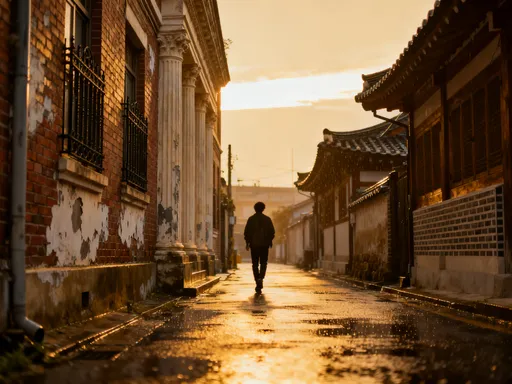
The heart of Incheon’s architectural legacy beats strongest in the Incheon Open Port District and the surrounding Jemulpo neighborhood. These areas, once the bustling epicenter of international commerce, are now open-air museums of cultural fusion. Here, buildings constructed in the late 1800s and early 1900s stand as testaments to a Korea caught between isolation and integration. The architecture reflects this tension—European neoclassical columns rise beside tiled Korean roofs, while Japanese-era brickwork blends with Chinese-style courtyard layouts.
One of the most striking examples is the former Russian Consulate, a two-story building with symmetrical windows, a gently sloping roof, and a façade of pale yellow stucco. Though no longer used for diplomatic purposes, its presence anchors the district, reminding visitors of the city’s multinational past. Nearby, the old French School building, now converted into a cultural center, features arched doorways and tall, narrow windows that once filtered soft coastal light into classrooms. These structures were not mere imports; they were reinterpreted through local craftsmanship, resulting in a unique hybrid style that belongs only to Incheon.
Preservation efforts in the Open Port District have been thoughtful and respectful. Rather than freezing buildings in time, restoration projects have prioritized adaptive reuse. This means that visitors don’t just look at history—they step into it. A former customs office now houses a café where patrons sip coffee beneath exposed wooden beams, while an old bank building hosts rotating art exhibitions. Bilingual signage in Korean and English, sometimes with Chinese or Japanese characters, echoes the linguistic diversity that once defined the port. Even the street lamps—replicas of early 20th-century designs—contribute to an atmosphere that feels authentic, not staged.
Walking through these streets, one begins to appreciate the textures of history. The uneven brickwork, laid by hand over a century ago, tells of labor and precision. The iron railings, many imported from Europe, bear the faint marks of oxidation—a quiet reminder of time’s passage. These are not grand monuments meant for photographs from a distance; they are intimate, human-scale structures that invite touch, reflection, and connection.
Between Tradition and Modernity: The Evolution of Urban Design
Incheon’s architectural journey does not end in the past. The city is also a laboratory for forward-thinking urban design, nowhere more evident than in Songdo International Business District. Built on reclaimed land from the Yellow Sea, Songdo represents a bold vision of the future—planned from scratch as a smart, sustainable city. Skyscrapers clad in reflective glass rise above tree-lined boulevards, while green rooftops and solar panels integrate environmental responsibility into the skyline.
What makes Songdo remarkable is not just its technology, but its intentionality. The city was designed with walkability in mind, featuring underground waste disposal systems, real-time transit tracking, and extensive bicycle networks. Buildings are constructed to meet high energy efficiency standards, and public plazas incorporate digital art installations that respond to weather or foot traffic. Yet despite its modernity, Songdo avoids feeling sterile. Landscaped parks, man-made canals, and open-air amphitheaters ensure that nature and community remain central to daily life.
The contrast between Songdo and Incheon’s old town could not be starker—yet the two are not opposites. Instead, they represent different chapters of the same story: a city constantly negotiating between preservation and progress. Travelers moving from the narrow alleys of Jemulpo to the wide avenues of Songdo may feel a shift in pace, but not a rupture in identity. The same spirit of innovation that drew foreign traders to Incheon in the 1880s now attracts global businesses and tech startups to Songdo.
Slow exploration allows visitors to appreciate these transitions. Stepping from a centuries-old stone street into a glass-walled plaza with digital water features is not just a change of scenery—it’s a lesson in urban evolution. The architecture here doesn’t shout; it whispers possibilities. It asks not to be admired from afar, but to be experienced up close, understood in context, and respected for its purpose. In Songdo, form follows function, but also foresight—a reminder that cities are not just built for today, but for generations yet to come.
Hidden Courtyards and Secret Staircases: Off-the-Beaten-Path Structures
Beyond the curated lanes of the Open Port District and the polished plazas of Songdo, Incheon hides quieter, more personal architectural treasures. These are not listed in guidebooks or marked on tourist maps, but they are no less meaningful. They include hillside homes with hand-carved wooden gates, forgotten chapels with stained-glass windows depicting coastal light, and abandoned administrative buildings slowly being reclaimed by ivy and moss. To find them, one must wander without a fixed destination, follow narrow staircases upward, or turn down alleys that seem to lead nowhere.
One such discovery is a small, privately owned teahouse nestled in the Daldong neighborhood. Housed in a converted colonial-era residence, the building blends Western-style windows with a traditional Korean courtyard. Guests remove their shoes before stepping onto wooden floors that creak with age and character. The ceiling beams, exposed and unpainted, bear the marks of decades of use. From the garden, a view of Incheon’s harbor unfolds—ships moving like silent toys against the horizon. This is not a commercialized experience; it is a space of stillness, shared generously by a family dedicated to preserving their home’s legacy.
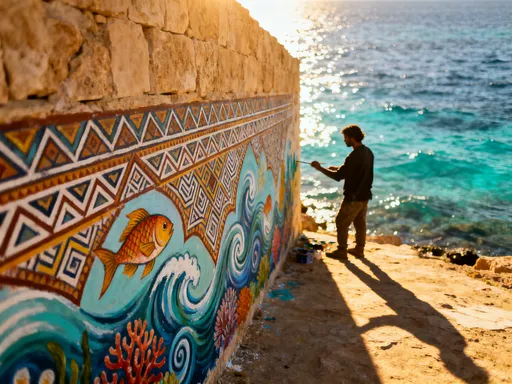
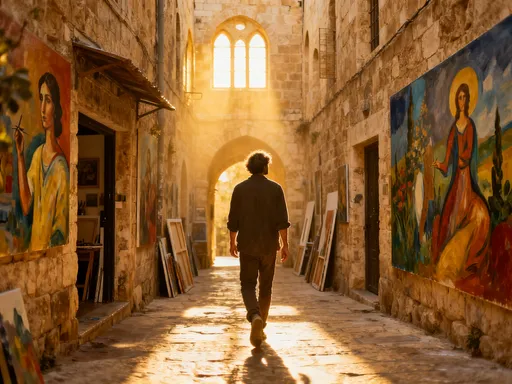
Another hidden gem is a series of murals integrated into the structural walls of alleyways near Chinatown. These are not mere graffiti, but carefully composed artworks that interact with the architecture—windows framed as paintings, doorways transformed into theatrical arches. Some depict historical scenes from Incheon’s port days, while others celebrate local flora and fauna. The murals do not cover the buildings; they converse with them, enhancing rather than erasing their character. Finding these spaces feels like being let in on a secret—a reward for those who resist the urge to rush.
These off-the-beaten-path sites offer something increasingly rare in modern travel: authenticity. They are not designed for Instagram, nor do they cater to mass tourism. Instead, they exist for their communities, for memory, for beauty in its quietest form. Visiting them requires patience and respect. Some are still private residences; others are maintained by local volunteers. But for the slow traveler, they provide a deeper understanding of Incheon—not as a destination, but as a lived-in, evolving home.
Architecture Meets Daily Life: Cafés, Galleries, and Community Spaces
One of the most beautiful aspects of Incheon’s architectural revival is how seamlessly history has been woven into contemporary life. Old buildings are not preserved behind glass; they are repurposed, reimagined, and reanimated. A former post office now hosts rotating photography exhibitions. A disused school building has been transformed into a community library with reading nooks beneath original skylights. These adaptive reuse projects do more than save structures from demolition—they give them new meaning.
Cafés play a particularly vital role in this transformation. In the Open Port District, several colonial-era homes have been converted into coffee shops where the past is not hidden but highlighted. One popular spot features a glass floor section revealing the original stone foundation, while another retains its vintage wooden staircase and ceiling beams. Patrons sip lattes beneath chandeliers that may have once lit diplomatic receptions. The sensory experience—of cool tile underfoot, the scent of aged wood, the play of light through tall windows—creates a mood of calm and continuity.
Art galleries, too, have found homes in unexpected places. A former customs warehouse now displays contemporary Korean sculpture, its high ceilings and industrial columns providing the perfect backdrop for large installations. Another gallery, located in a renovated Japanese-era office, focuses on printmaking and calligraphy, bridging historical and modern artistic traditions. These spaces attract both locals and visitors, becoming hubs of cultural exchange.
Perhaps most importantly, architecture in Incheon fosters community. Courtyards once reserved for officials or merchants are now public parks where families gather, children play, and elders practice tai chi. Benches are placed to catch morning sun, and trees are planted to provide shade in summer. These small design choices reflect a philosophy of inclusivity—of building not just for beauty, but for belonging. When architecture serves people, it becomes more than structure; it becomes sanctuary.
Practical Tips for a Slow Architectural Journey
Planning a slow architectural journey through Incheon requires more than a map—it requires a mindset. The goal is not to check off landmarks, but to immerse oneself in the rhythm of the city. To help travelers make the most of their visit, here are several practical suggestions.
Begin in the Incheon Open Port District, where the density of historic buildings is highest. Start early in the morning, when sunlight strikes the facades at a low angle, emphasizing textures and shadows. A recommended route begins at the old Russian Consulate, continues along Jemulpo Street, and loops through the former French School and the reconstructed Chinatown archway. Allow at least three hours for this walk, with time to pause, photograph, and rest.
From there, consider taking the Incheon Subway Line 1 to Songdo. The contrast between old and new will be immediately apparent. In Songdo, walk from Central Park Station to Triple Street, a mixed-use area with shops, restaurants, and public art. Visit the Songdo Convensia building, notable for its sweeping curves and glass canopy, and take a moment to sit by the canal, observing how architecture interacts with water and sky.
Comfortable footwear is essential. Many streets in the old district are paved with uneven stone, and hillside neighborhoods involve stairs. Wear breathable clothing and carry water, especially in summer. While guided tours are available, self-guided exploration using apps like Naver Maps or KakaoMap allows for spontaneity. These apps offer walking directions, historical notes, and user reviews in English.
Transportation within Incheon is efficient and affordable. The subway connects major districts, while buses reach more residential areas. Taxis are readily available and reasonably priced. However, the best way to experience the city is on foot. Allow time for unplanned detours—follow a staircase uphill, peek into a courtyard, or accept an invitation to a neighborhood event. Some of the most memorable discoveries happen by accident.
Finally, respect local customs. Many buildings are still in use, and some are private homes. Avoid loud conversations, do not enter restricted areas, and always ask before photographing people. A quiet, observant presence is welcomed; a disruptive one is not. By moving with care and curiosity, travelers honor both the architecture and the community that sustains it.
Why Slowness Reveals True Beauty: A Final Reflection
In a world that often equates travel with speed, Incheon offers a different invitation: to slow down, to look closer, to listen. Its architecture does not announce itself with grandeur or spectacle. Instead, it reveals itself in fragments—in the curve of a staircase, the pattern of a tile, the way sunlight filters through a century-old window. These details are not for those who rush. They are for those who pause.
Fast tourism sees landmarks. Slow travel sees meaning. It understands that a building is not just a structure, but a vessel of memory, identity, and human effort. In Incheon, every brick, every beam, every restored façade carries a story—of trade and transformation, of loss and renewal, of a city that has learned to carry its past into the future without being burdened by it.
Choosing slowness is not a rejection of efficiency; it is a redefinition of value. It means trading distance for depth, quantity for quality, sightseeing for seeing. When we walk slowly through Incheon, we do more than observe architecture—we participate in it. We become part of its ongoing story, adding our footsteps to the layers of time.
And in that quiet participation, we find something rare: a sense of connection. Not just to a place, but to the people who built it, lived in it, and continue to shape it. Incheon’s hidden architectural gems are not hidden because they are inaccessible, but because they require a certain kind of attention—one that only comes when we decide to wander slow, and see more.