You Won’t Believe These Hidden Art Spots in Jerusalem
Jerusalem isn’t just ancient stones and holy sites—it’s a living canvas. I went searching for quiet corners where creativity thrives and found stunning art spaces hiding in plain sight. From vibrant street murals to intimate galleries tucked in old stone alleys, these spots blend tradition and modernity in unexpected ways. If you're chasing authentic moments and killer photo ops, this city has layers you never knew existed. Let me show you where the real artistic soul of Jerusalem lives.
Beyond the Holy City: The Rise of Jerusalem’s Art Scene
Jerusalem is often seen through the lens of faith and history—its towering walls, sacred shrines, and millennia-old streets drawing millions of pilgrims and tourists each year. But beneath this spiritual surface lies a quietly flourishing art movement, one that respects tradition while boldly reimagining the city’s identity. In recent decades, Jerusalem has nurtured a growing community of painters, sculptors, photographers, and street artists who use the city itself as both muse and medium. This evolution hasn’t happened in isolation. Cultural institutions, private patrons, and municipal initiatives have increasingly supported contemporary expression, recognizing that art is not a distraction from Jerusalem’s soul, but a vital part of it.
The city’s complex history—layered with religious significance, political transitions, and cultural convergence—naturally fuels creative exploration. Artists in Jerusalem often draw from this rich tapestry, weaving ancient symbols, languages, and textures into modern forms. The tension between reverence and reinvention becomes a source of inspiration rather than conflict. You can see it in the way a Hebrew prayer fragment is transformed into abstract calligraphy, or how stone carvings echo both archaeological relics and avant-garde sculpture. This dialogue between past and present gives Jerusalem’s art scene a depth that’s rare in other global cities.
Several neighborhoods have emerged as unofficial creative hubs, where galleries, studios, and public art installations are reshaping local character. Areas like the German Colony, Yemin Moshe, and even parts of the Old City now pulse with artistic energy. These pockets of creativity don’t overshadow the city’s sanctity—they complement it, offering alternative ways to experience Jerusalem. For visitors, this means more than just ticking off religious landmarks. It opens the door to slower, more intimate encounters—conversations with artists, quiet moments in sunlit courtyards, and the thrill of discovering a mural tucked between centuries-old buildings. The rise of Jerusalem’s art scene invites travelers to look beyond the expected and embrace the city’s multifaceted spirit.
Machane Yehuda Market: Where Flavors Meet Murals
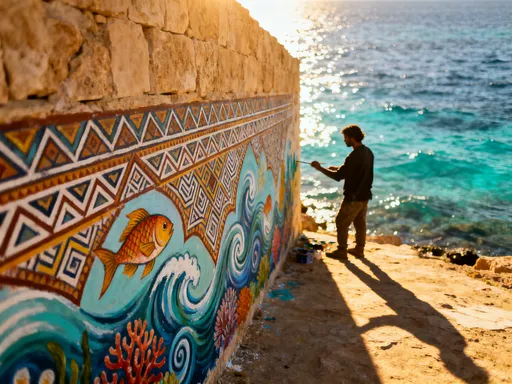
No visit to Jerusalem’s artistic landscape is complete without a stroll through Machane Yehuda Market, a vibrant sensory explosion that has quietly become one of the city’s most dynamic open-air galleries. Once known solely for its spices, fresh produce, and bustling crowds, the market has undergone a creative renaissance. Over the past decade, local artists have transformed its alleyways and building facades into a rotating canvas of color, storytelling, and social commentary. The result is a place where the aroma of za’atar mingles with the sharp scent of spray paint, and where every turn reveals a new visual surprise.
One of the most iconic pieces is the "Mama Lilli" mural, a tribute to a beloved vendor who became a symbol of the market’s warmth and resilience. Painted in bold, expressive strokes, the portrait captures her laughter and spirit, inviting passersby to pause and remember the human stories behind the stalls. Other murals reflect broader themes—cultural diversity, coexistence, and the rhythm of daily life in Jerusalem. Some are playful, like the giant hand reaching out from a wall to hold a real bunch of bananas. Others are more introspective, using symbolic imagery to explore identity and memory.
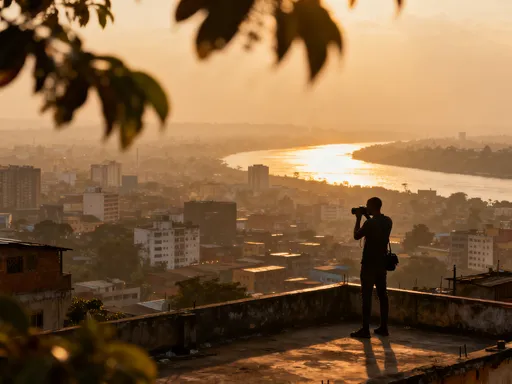
What makes Machane Yehuda especially photogenic is its natural light and constant motion. Early morning, just after sunrise, casts a soft golden glow on the stone walls, perfect for capturing murals without harsh shadows. By late afternoon, the market is alive with shoppers, cooks, and tourists, creating opportunities for candid shots that blend art and action. Street performers, flower vendors, and café patrons add layers of color and movement. For photographers, the key is to wander slowly, camera in hand, and let the details reveal themselves—peeling paint beside a fresh stencil, a cat lounging beneath a political mural, or the way sunlight hits a mosaic made from broken tiles.
The market also hosts rotating art installations, often linked to cultural festivals or seasonal events. During Hanukkah, for example, glowing menorah sculptures appear in unexpected corners. In spring, floral-themed art pieces bloom alongside real blossoms. These temporary works keep the visual experience fresh and encourage repeat visits. Best of all, the art here feels accessible. Unlike formal galleries, there are no guards or rules—just an invitation to look, reflect, and connect. For families and solo travelers alike, Machane Yehuda offers a joyful, unpretentious way to engage with Jerusalem’s creative pulse.
The Artist’s Quarter in the Old City: Creativity Within Ancient Walls
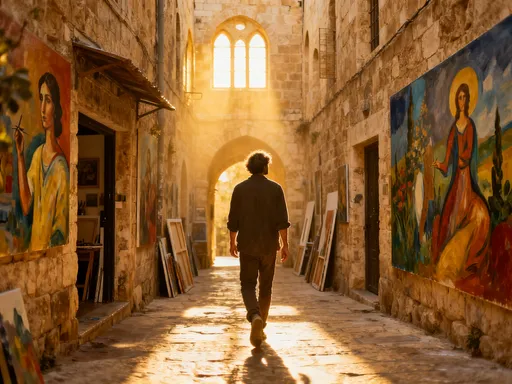
Within the ancient stone labyrinth of Jerusalem’s Old City, tucked between prayer sites and pilgrimage routes, lies a network of small studios and workshops that form the heart of its artisan community. This unofficial “Artist’s Quarter,” concentrated in the Armenian and Jewish Quarters, is where tradition and innovation converge in quiet but powerful ways. Here, skilled craftspeople spend hours shaping clay, inking delicate calligraphy, or weaving textiles using techniques passed down through generations. Yet they are not merely preserving the past—they are reinterpreting it, infusing age-old methods with contemporary design and personal vision.
In the Armenian Quarter, ceramicists create hand-painted tiles that echo both Byzantine mosaics and modern abstract art. Their workshops, often just a room or two with a kiln in the corner, open directly onto narrow alleys. Visitors can watch as artisans dip fine brushes into mineral-based glazes, tracing floral patterns or ancient Armenian script. Some pieces are devotional—icons or liturgical objects—while others are purely decorative, meant for homes and galleries. The process itself is meditative, a rhythm of concentration and care that contrasts with the hurried pace of tourists outside.
The Jewish Quarter, meanwhile, is home to calligraphers who blend sacred text with artistic expression. Using quills and handmade ink, they transcribe Psalms, prayers, and poetic verses onto parchment or fine paper. Some artists experiment with form, arranging letters into shapes—a dove, a tree, a menorah—so that the message is conveyed not just through words but through image. Others work in mixed media, layering gold leaf over textured backgrounds to create pieces that shimmer in candlelight. These works are not just art; they are acts of devotion, each stroke imbued with intention.
For visitors, the challenge is to engage respectfully. Many of these spaces are both workplaces and spiritual environments. Photography should be approached with permission and sensitivity, especially when religious texts or rituals are involved. A quiet word of greeting, a genuine interest in the craft, and a willingness to listen often open doors more than a camera lens. When allowed, photographing the hands at work—the curve of a brush, the tension in a calligrapher’s wrist—can yield powerful, intimate images. These moments capture not just beauty, but the dignity of creation. The Artist’s Quarter reminds us that art in Jerusalem is not always loud or public; sometimes, it thrives in silence, one careful stroke at a time.
Tower of David Museum: History Meets Modern Visual Storytelling
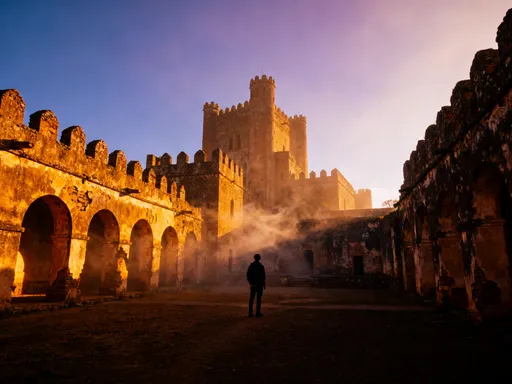
Perched at the edge of the Old City’s Jaffa Gate, the Tower of David Museum stands as a bridge between Jerusalem’s past and its present, where archaeology and contemporary art coexist in harmonious dialogue. Housed in a medieval citadel with roots stretching back over 2,000 years, the museum has evolved into a dynamic cultural venue that embraces innovation without diminishing its historical weight. Its exhibitions go beyond static displays of artifacts—they incorporate light projections, soundscapes, and interactive installations that bring ancient narratives to life in vivid, emotional ways.
One of the most captivating experiences is the Night Spectacular, a 45-minute multimedia show projected onto the museum’s ancient stone walls. As darkness falls, the courtyard fills with visitors seated in quiet anticipation. Suddenly, light floods the ramparts, animating centuries of Jerusalem’s history through moving images, music, and narration. You might see shadows of Roman soldiers marching, followed by the delicate dance of Byzantine mosaics coming to life, or the quiet resilience of families rebuilding after war. The effect is both educational and deeply moving, transforming the fortress into a living storybook.
For photographers, the evening hours offer some of the most dramatic opportunities in the city. The interplay of projected light and weathered stone creates textures and contrasts that are impossible to replicate elsewhere. Long exposures capture the flow of images across the walls, while candid shots of the audience—faces illuminated by the glow—add a human element. Even outside of the show, the museum’s courtyards and towers provide stunning vantage points. From the upper ramparts, you can frame the Old City’s rooftops against the twilight sky, with the golden hue of distant minarets and church domes glowing in the distance.
But the museum’s power lies not just in spectacle. Its smaller galleries host rotating contemporary exhibitions that explore identity, memory, and coexistence through the eyes of modern artists. These works often respond directly to the city’s complexities, using metaphor and abstraction to navigate sensitive themes with grace. A sculpture made from reclaimed wood from old homes, a series of photographs documenting forgotten alleyways, or a video installation of children’s voices reciting poems in multiple languages—each piece invites reflection without preaching. The Tower of David doesn’t offer easy answers, but it creates space for questions. In doing so, it proves that art can be both rooted in history and boldly forward-looking.
Street Art Along Emek Refaim: Bohemian Vibes in German Colony
Just a short walk from the bustling center of West Jerusalem, the tree-lined avenue of Emek Refaim in the German Colony offers a different rhythm—one of café culture, boutique shops, and an ever-evolving street art scene. Once a quiet residential area built by 19th-century German Templars, the neighborhood has transformed into a bohemian enclave where creativity flows as freely as the coffee in its sidewalk cafés. Along its limestone buildings, vibrant murals and subtle stencils tell stories of identity, social justice, and everyday life in a city that’s constantly redefining itself.
The street art here is diverse in style and message. Some pieces are whimsical, like the mural of a girl floating among paper airplanes, her dress made from old maps of Jerusalem. Others are more pointed, addressing themes like environmental awareness, peace, or the rights of marginalized communities. One particularly moving piece depicts two hands—one Jewish, one Arab—reaching toward each other across a cracked wall, the space between them filled with blooming flowers. These works don’t shout; they invite conversation, often blending humor, hope, and quiet defiance.
What makes Emek Refaim special is how seamlessly art integrates with daily life. A mural wraps around the corner of a bakery, its colors matching the awning. A stencil of a dancing cat appears beside a bookstore’s entrance. Even the manholes are painted—some with eyes, others with patterns that mimic traditional tile work. For photographers, this means endless opportunities for creative composition. Reflections in café windows, shadows cast by afternoon sun, or the way a passerby’s umbrella echoes the color of a nearby painting—all these details add depth to your shots.
The neighborhood also hosts galleries and artist-run spaces that blur the line between public and private art. Small exhibitions pop up in café backrooms, bookshops, or even laundromats. During events like the annual Jerusalem Season of Culture, the street becomes a stage for performances, installations, and open studios. This grassroots energy keeps the area from feeling overly polished or commercialized. While gentrification has brought higher rents and trendy boutiques, the spirit of independent creativity endures. Emek Refaim proves that art doesn’t need a grand institution to thrive—it can grow in the cracks of everyday life, nurtured by community and vision.
The Israel Museum & Rockefeller Park: Sculpture Among Ruins
At the heart of Jerusalem’s cultural district, the Israel Museum and its surrounding Rockefeller Park form a sanctuary of art, history, and nature. While the museum is world-renowned for its Dead Sea Scrolls and archaeological collections, its outdoor spaces are equally compelling—especially for those drawn to sculpture, landscape, and the poetic interplay between old and new. The museum’s Outdoor Sculpture Garden features works by internationally acclaimed artists such as Auguste Rodin, Alexander Calder, and Jean Dubuffet, each piece thoughtfully placed among olive trees, stone pathways, and ancient terraces.
Walking through the garden feels like stepping into a dialogue between civilizations. A bronze Calder mobile sways gently above a 2,000-year-old aqueduct. Rodin’s powerful figures stand in quiet contemplation beside fragments of Roman columns. Dubuffet’s abstract forms, with their rough textures and primal energy, echo the Judean hills in the distance. These juxtapositions are not accidental—they are curated to provoke thought about continuity, influence, and the timeless nature of artistic expression. For photographers, the garden offers endless compositional possibilities: framing a sculpture against the sky, capturing the shadow of a metal form on sunlit stone, or focusing on the texture of weathered bronze beside fresh greenery.
Adjacent to the museum, Rockefeller Park extends this sense of serene exploration. Less formal and more wild, the park is dotted with hidden clearings, stone benches, and the remains of ancient buildings repurposed as quiet retreats. Here, you can find a secluded spot beneath a carob tree, where dappled light filters through leaves onto a forgotten mosaic floor. It’s the perfect place for contemplative photography—images that capture stillness, solitude, and the quiet beauty of decay and renewal. Families often picnic here, children playing near restored cisterns, their laughter blending with the rustle of leaves.
The park also hosts occasional open-air exhibitions and performances, especially in spring and autumn. Sculptures by contemporary Israeli artists appear temporarily, often engaging with themes of memory, landscape, and coexistence. These installations are designed to be discovered—not announced with signs, but revealed through wandering. This sense of discovery is central to the experience of art in Jerusalem. It’s not always about grand monuments or famous names; sometimes, it’s about the quiet moment when you turn a corner and find a stone figure watching over a patch of wildflowers, or a poem carved into a bench where no one is sitting. The Israel Museum and Rockefeller Park remind us that art, like nature, grows best when given space to breathe.
Off-the-Beaten-Path Studios in Yemin Moshe and Ein Kerem
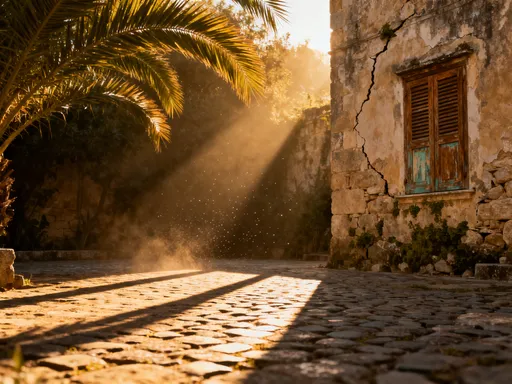
For those willing to wander beyond the main tourist routes, the neighborhoods of Yemin Moshe and Ein Kerem offer some of Jerusalem’s most poetic and intimate artistic encounters. Perched on hillsides, these areas are known for their winding cobblestone streets, stone villas with ivy-covered walls, and gardens that seem to bloom year-round. They have long attracted artists, writers, and musicians seeking inspiration—and today, many still open their homes and studios to visitors, especially during cultural festivals or by appointment.
In Yemin Moshe, just steps from the iconic windmill, several small ateliers operate in restored 19th-century buildings. One painter works with layers of translucent paint to capture the changing light over the Old City walls. Another sculptor uses local stone and metal to create abstract forms that suggest both human figures and ancient ruins. Visiting these spaces often feels personal—a chance to speak with the artist, hear their story, and see works in progress. For photographers, the lighting is exceptional: soft morning sun filtering through lace curtains, or golden hour casting long shadows across drafting tables and canvases.
Ein Kerem, nestled in a valley southwest of the city center, feels almost like a village from another time. Its narrow lanes lead to hidden courtyards where potters, jewelers, and painters work in quiet harmony with nature. Some studios are open only on weekends or during the annual Ein Kerem Artists’ House Festival, when dozens of creators welcome the public. This limited access adds to the sense of discovery. You might knock on a wooden door, be invited in with a smile, and spend an hour watching an artist hand-paint ceramic tiles with botanical motifs inspired by the surrounding flora.
These visits offer more than just photo opportunities—they create ethical, meaningful connections. With permission, you might photograph an artist at work, their hands covered in clay or paint, their expression focused and calm. These portraits, when done respectfully, honor the labor and spirit behind the art. They also allow you to bring home not just images, but stories—of resilience, of passion, of a life dedicated to creation in a city that demands so much of its people. Yemin Moshe and Ein Kerem remind us that the heart of Jerusalem’s art scene beats not in grand institutions, but in quiet rooms where imagination takes shape, one careful gesture at a time.
Conclusion: Seeing Jerusalem Through an Artist’s Eyes
Jerusalem is often viewed through the prism of religion, politics, or history—each lens revealing only part of its truth. But when you walk its streets with an artist’s eye, a different city emerges. One of quiet courtyards where calligraphy unfolds like a prayer, of market walls pulsing with color and voice, of sculptures standing sentinel between ancient stones and modern dreams. This Jerusalem is not less sacred—it is more human. It is a place where creativity becomes a form of resilience, where beauty is made not in spite of complexity, but because of it.
To explore these hidden art spots is to slow down, to look closely, and to listen. It is to move beyond the checklist of landmarks and instead seek moments of connection—between past and present, between tradition and innovation, between stranger and creator. Photography, when done with intention, becomes more than documentation; it becomes an act of reverence. Each frame captures not just a scene, but a story—a hand shaping clay, light dancing on a mural, a quiet garden where art and history rest together.
Jerusalem’s artistic soul is not loud or boastful. It does not demand attention. It waits in the alleys, the studios, the quiet corners where imagination finds room to grow. For the curious traveler, the reward is profound: a deeper understanding of a city that continues to evolve, to create, to endure. So bring your camera, your curiosity, and your respect. Walk slowly. Look closely. And let Jerusalem reveal itself, one brushstroke at a time.