Lost in the Royal Stones of Gondar
Stepping into Gondar feels like walking through a living history book. Once the seat of Ethiopian emperors, this highland city carries the soul of a golden age. Its castles rise like ancient sentinels, churches hum with sacred chants, and every cobblestone seems to whisper stories of power and faith. I came expecting ruins—I left transformed by the depth of its cultural spirit. Nestled at over 2,000 meters in the Ethiopian highlands, Gondar is not merely a destination but a portal into a civilization that once stood at the crossroads of faith, governance, and artistry. For travelers seeking authenticity beyond the usual tourist circuits, this city offers a rare chance to witness history not as a distant echo, but as a living, breathing presence.
The Heartbeat of a Forgotten Empire
Gondar’s story begins in the early 17th century, when Emperor Fasilides broke with centuries of tradition by establishing a permanent capital. Before his reign, Ethiopian rulers governed from mobile courts, moving across the highlands with their armies and retinues. This nomadic system, while flexible, limited the development of centralized institutions, infrastructure, and lasting cultural projects. Fasilides’ decision to settle in one place was revolutionary—not only for Ethiopia but for the entire Horn of Africa. By anchoring the empire in Gondar, he laid the foundation for a new era of political stability, architectural innovation, and religious scholarship.
The city quickly evolved into a center of imperial power and spiritual life. Its location in the cool, fertile highlands provided strategic advantages: protection from invasions, access to agricultural resources, and proximity to key trade routes connecting the interior with the Red Sea. But what truly set Gondar apart was its cosmopolitan character. Unlike many isolated royal seats, Gondar welcomed influences from beyond its borders. Traders, missionaries, and artisans from Nubia, the Arabian Peninsula, and even Europe brought ideas that fused with local traditions. This convergence is most visible in the city’s early architecture, where Ethiopian construction techniques merged with Arab-style arches, Portuguese-inspired Baroque details, and Indian-influenced balconies.
The synthesis of these styles gave rise to a unique architectural language—one that still defines Gondar’s skyline today. Thick stone walls, turrets with conical roofs, and intricately carved wooden beams reflect a blend of defensive necessity and royal elegance. Fasilides’ vision was not just to build a capital, but to create a symbol of unity and divine authority. His reign marked the beginning of what historians now call the Gondarine period, a golden age in which art, religion, and governance flourished under imperial patronage. The city became a beacon of learning, housing monasteries, scriptoriums, and schools where scholars copied ancient manuscripts and debated theology.
While later emperors would face internal strife and regional challenges, the cultural momentum initiated by Fasilides endured. Gondar remained a spiritual and administrative heart long after the imperial court’s influence waned. Today, walking through its historic core is to step into a world shaped by ambition, faith, and cross-cultural exchange—an enduring legacy of a time when Ethiopia confidently engaged with the wider world on its own terms.
Fasil Ghebbi: Where Kings Once Walked
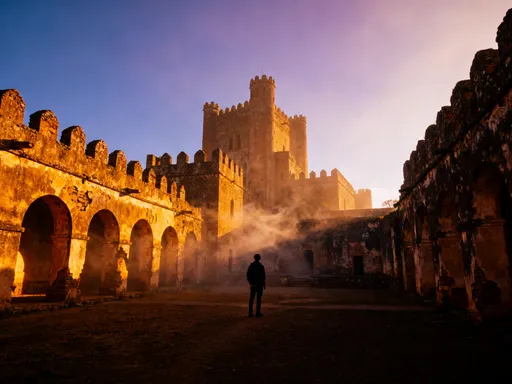
At the center of Gondar’s historical landscape stands Fasil Ghebbi, a walled royal compound inscribed as a UNESCO World Heritage Site. This fortress complex, spanning roughly seven hectares, served as the residence and administrative hub for successive emperors from the 17th to the 19th centuries. Comprising six major castles, royal libraries, stables, banquet halls, and ceremonial baths, Fasil Ghebbi is one of the most remarkable examples of indigenous African urban planning and royal architecture. Its towers rise like stone sentinels, their weathered facades bearing the marks of centuries while still conveying the grandeur of imperial life.
The oldest and most iconic structure within the compound is Fasilides’ Castle, a four-story fortress built with locally quarried volcanic stone and lime mortar. Its design reflects both practicality and symbolism: thick walls for defense, narrow windows for security, and an elevated throne room that once hosted court officials and foreign envoys. The interior layout reveals a sophisticated understanding of space and function, with separate quarters for the emperor, his family, and court attendants. Staircases spiral upward through dimly lit passages, leading to rooftop terraces that offer sweeping views of the surrounding highlands. At sunrise, when golden light spills over the battlements, the castle seems to awaken, echoing with the imagined footsteps of royal processions.
Adjacent to Fasilides’ Castle stands the palace of Emperor Iyasu the Great, known for its more elaborate ornamentation and larger banquet hall. Iyasu, who ruled in the late 17th and early 18th centuries, was a patron of the arts and expanded the compound to accommodate growing court rituals and diplomatic engagements. His palace features arched doorways, vaulted ceilings, and decorative niches that once held oil lamps or religious icons. The adjacent stables, capable of housing dozens of horses, speak to the military importance of cavalry in imperial campaigns. Nearby, the modest yet elegant castle of Emperor Dawit III includes a private chapel and a council chamber, illustrating how religious and political life were seamlessly intertwined.
Visitors today are guided through the compound by local historians and trained interpreters, many of whom are descendants of families that have lived in Gondar for generations. Their oral histories add depth to the experience, recounting legends of royal feasts, diplomatic intrigues, and spiritual ceremonies that once animated these walls. Preservation efforts, supported by Ethiopia’s Authority for Research and Conservation of Cultural Heritage and international partners, focus on stabilizing structures, preventing erosion, and documenting architectural details. While some buildings remain partially unrestored, their authenticity is preserved through careful, non-invasive techniques that respect the original materials and craftsmanship.
Walking through Fasil Ghebbi is not merely an act of sightseeing; it is an immersion into a world where power was expressed through stone, light, and space. The quiet courtyards, once filled with the bustle of court life, now invite contemplation. Children play near the old gatehouses, elders rest in shaded corners, and the wind carries faint echoes of chants from nearby churches. In this place, history does not feel distant—it breathes, shifts, and endures.
Debre Berhan Selassie: A Hidden Crown of Art
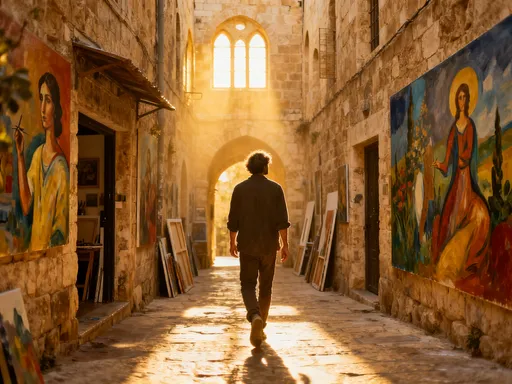
Just beyond the walls of Fasil Ghebbi lies Debre Berhan Selassie, Gondar’s most revered church and a masterpiece of Ethiopian Orthodox art. Unlike the fortress’s imposing stone architecture, this sanctuary offers a different kind of awe—one of color, symbolism, and spiritual intensity. The exterior is unassuming: a whitewashed rectangular building with a thatched roof and simple wooden doors. But step inside, and the transformation is breathtaking. Every surface—from the walls to the ceiling—is covered in vivid murals depicting biblical scenes, saints, angels, and the mysteries of the faith. The air is thick with the scent of frankincense, and the flicker of oil lamps casts a golden glow on centuries-old paintings that have survived wars, invasions, and time.
The most celebrated feature of Debre Berhan Selassie is its ceiling, a painted wooden dome that represents the Heavenly Jerusalem. At its center is the Lamb of God, surrounded by the four living creatures described in the Book of Revelation: a man, a lion, an ox, and an eagle. Radiating outward are the 24 elders, dressed in white robes and golden crowns, seated in reverence before the divine throne. The composition is both intricate and harmonious, each figure rendered with expressive detail and symbolic precision. The use of red, blue, and gold pigments—derived from natural minerals—has retained its brilliance, a testament to the skill of the unknown artists who created this sacred space in the 18th century.
What makes this church especially significant is its survival. During the 18th-century conflicts that devastated much of Gondar, Debre Berhan Selassie was spared, according to local tradition, because a swarm of bees formed a protective barrier around its roof, deterring attackers. Whether myth or memory, the story underscores the deep reverence the community holds for this place. Unlike many historical sites that exist primarily for tourists, Debre Berhan Selassie remains an active center of worship. Daily prayers are held here, and it plays a central role during major religious festivals such as Timkat (Epiphany), when processions wind through the streets accompanied by drumming, chanting, and the waving of ornate umbrellas.
For visitors, entering the church requires adherence to modest dress—shoulders and knees must be covered, and shoes are removed at the door. Women are often provided with shawls, and all guests are expected to walk quietly, respecting the sanctity of the space. Photography is typically not permitted inside, preserving the integrity of the sacred environment. Local guides explain the symbolism of the murals, helping visitors understand that each image is not merely decorative but didactic, designed to teach scripture to a largely illiterate population in earlier centuries. In this way, the church functions not only as a place of worship but as a living classroom of faith and history.
Beyond the Castles: Living Culture in the Alleys
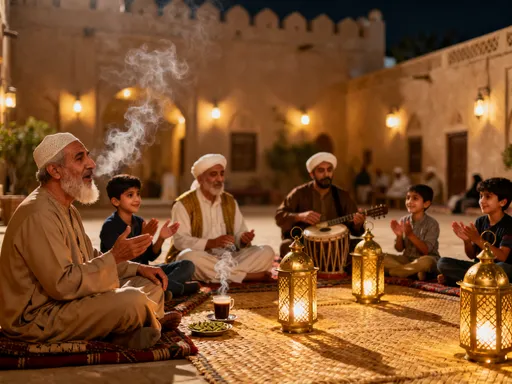
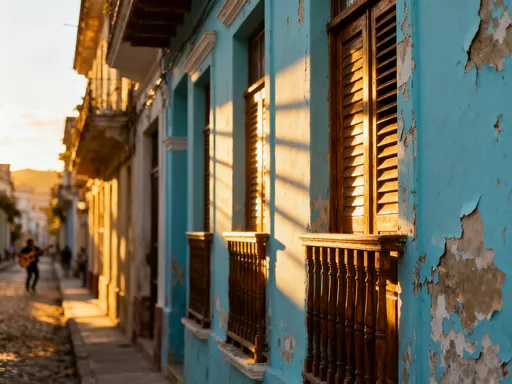
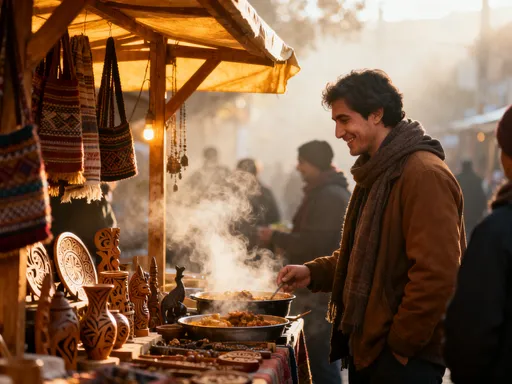
While the castles and churches draw global attention, the true soul of Gondar pulses in its narrow alleys and bustling courtyards. Here, tradition is not preserved behind glass—it is lived, worn, and shared. Artisans hammer leather into sandals using techniques passed down for generations. Weavers sit at wooden looms, producing cotton cloth with geometric patterns that carry clan identities and regional meanings. In shaded compounds, elders gather for the Ethiopian coffee ceremony, roasting beans over a small fire, grinding them by hand, and serving three rounds of strong, aromatic brew—a ritual symbolizing friendship, peace, and blessing.
One such artisan is Abeba, a third-generation leatherworker whose family has lived in Gondar for over a century. From her small workshop near the market, she crafts handbags, belts, and traditional footwear using vegetable-tanned hides and natural dyes. “My grandmother taught my mother, and she taught me,” she says, smoothing a strip of leather with practiced hands. “This is not just work—it is our heritage.” Her workshop doubles as a training space for young apprentices, many of whom are women seeking sustainable livelihoods. Similar initiatives exist in weaving, pottery, and embroidery, often led by community cooperatives that reinvest profits into education and cultural preservation.
Music and dance also thrive beyond the tourist gaze. In neighborhood courtyards, youth practice the *eskista*, a traditional dance characterized by rapid shoulder movements and rhythmic footwork. The dance, often performed during festivals and family celebrations, is more than entertainment—it is a form of storytelling and communal identity. Local elders teach the steps to younger generations, ensuring that the movements, costumes, and songs are not lost to time. On Sundays, church choirs rehearse in open-air spaces, their harmonies blending ancient liturgical chants with regional melodies.
These everyday expressions of culture are increasingly recognized as vital to Gondar’s identity. Unlike staged performances for tourists, these practices unfold organically, rooted in community life. Travelers who take the time to engage—by visiting a local home, sharing a meal, or learning a craft—often speak of a deeper connection than any museum visit could provide. It is in these moments of quiet exchange that the city reveals its warmth, resilience, and enduring spirit.
How to Experience Gondar Like a Local
To truly appreciate Gondar, one must move beyond the checklist of landmarks and embrace a slower, more intentional rhythm of travel. The best time to visit is during the dry season, from October to March, when skies are clear and temperatures are mild. Most travelers arrive by road from Addis Ababa, a seven- to eight-hour journey that offers stunning views of the Ethiopian highlands. While domestic flights are limited, the overland route allows for gradual acclimatization to the altitude and opportunities to stop in historic towns like Debre Markos or Bahir Dar.
Once in Gondar, the historic core is best explored on foot. A recommended walking route begins at Fasil Ghebbi in the morning, when the light is soft and crowds are small. From there, a 15-minute walk leads to Debre Berhan Selassie, ideally timed to coincide with morning prayers or a guided tour. Afterward, wandering through the surrounding neighborhoods offers a chance to visit local markets, where vendors sell spices, handwoven textiles, and traditional pottery. The main market, open daily but busiest on Sundays, is a sensory experience—colorful stalls, the aroma of roasting coffee, and the hum of Amharic conversations.
Accommodation options range from modest guesthouses to heritage-inspired lodges. Staying in a family-run inn not only supports the local economy but often includes home-cooked meals featuring dishes like *doro wat* (spicy chicken stew) and *injera* (sourdough flatbread). Many hosts are eager to share stories, recommend hidden spots, or invite guests to join a coffee ceremony. Dining at local eateries, rather than tourist-oriented restaurants, offers a more authentic taste of Gondar’s culinary traditions.
For a deeper cultural immersion, visitors are encouraged to attend a Sunday church service or a neighborhood festival. These events are not performances but genuine expressions of community life. Observing with respect—dressing modestly, speaking softly, and asking permission before photographing—goes a long way in building trust and connection. The goal is not to witness culture as a spectator, but to participate in it as a respectful guest.
Challenges and the Road Ahead
Despite its richness, Gondar faces challenges in balancing preservation with accessibility. Infrastructure remains uneven: some pathways to historical sites are unpaved and slippery, signage is limited, and facilities for visitors with mobility impairments are scarce. These conditions can deter all but the most determined travelers. Yet, within these constraints, grassroots efforts are making a difference. Local guides, many trained through community cooperatives, provide invaluable context and ensure that tourism benefits residents directly. Entrance fees to Fasil Ghebbi and other sites are reinvested into conservation and youth employment programs, creating a sustainable cycle of care.
Restoration projects, often in collaboration with UNESCO and international conservation organizations, focus on stabilizing structures without compromising authenticity. Traditional materials and techniques are prioritized, ensuring that repairs align with original craftsmanship. For example, lime-based mortars are used instead of modern cement, and skilled masons are trained in historic stone-cutting methods. These efforts not only preserve buildings but also revive endangered artisan skills.
Another challenge is managing the impact of growing visitor numbers. While increased tourism brings economic opportunity, it also risks commodifying sacred spaces or disrupting daily life. Community leaders emphasize the importance of respectful engagement—urging visitors to prioritize listening over photographing, learning over consuming. Educational programs in schools now include heritage studies, fostering pride and stewardship among the next generation.
The road ahead requires continued investment, thoughtful planning, and local leadership. But the foundation is strong. Gondar’s heritage is not a relic to be frozen in time—it is a living legacy, shaped by those who call it home.
Why Gondar Matters in Today’s World
In an age of mass tourism and digital detachment, Gondar stands as a quiet rebuttal—a place where history is not packaged for consumption but lived with dignity. Its castles and churches are not merely monuments to past glory, but testaments to resilience, identity, and cultural continuity. At a time when many African histories are overshadowed or misrepresented, Gondar offers a powerful narrative of pre-colonial urban sophistication, artistic mastery, and spiritual depth.
The city challenges the myth that Africa lacked complex civilizations before European contact. Here, one sees evidence of centralized governance, architectural innovation, and intercultural exchange centuries before colonial borders were drawn. Gondar’s legacy invites a reevaluation of how we understand African heritage—not as something to be discovered by outsiders, but as knowledge preserved and transmitted by communities themselves.
For the modern traveler, Gondar offers more than sightseeing; it offers transformation. It asks us to slow down, to listen, to engage with humility. It reminds us that the most meaningful journeys are not about ticking off destinations, but about connecting with people, places, and histories that expand our sense of what it means to be human. In the quiet courtyards of Fasil Ghebbi, beneath the painted heavens of Debre Berhan Selassie, and in the laughter of children playing between ancient stones, Gondar whispers a simple truth: that the past is not behind us, but within us, waiting to be honored, understood, and carried forward.